

On 15 February, DMA‘S brought their widescreen melancholy to the cavernous expanse of O2 Victoria Warehouse, turning the old industrial shell into something tender, communal and gloriously loud.
Manchester crowds don’t do polite appreciation, and from the first chant-ready chorus it was clear this would be less a gig, more a mass exorcism in bucket hats and Adidas stripes.
DMA‘S have always been admirable for the tension they hold between laddish swagger and bruised romanticism, and tonight that duality felt heightened. The warehouse space, all exposed steel and echo, could have swallowed a lesser band whole.

Instead, they filled it with reverb-drenched guitars that shimmered like streetlights in rain, each chorus engineered not just to be heard but hurled back from the front row.
Tommy O’Dell’s voice remains the band’s secret weapon. It’s not technically pristine, but that’s precisely the point — there’s a grain to it, a crackle of vulnerability that cuts through the wall of sound. On the slower moments, the crowd swayed with arms aloft, voices rising in unison; on the anthems, pints flew and strangers became temporary best friends.
The emotional pendulum swung hard and fast, and no one wanted it to stop.
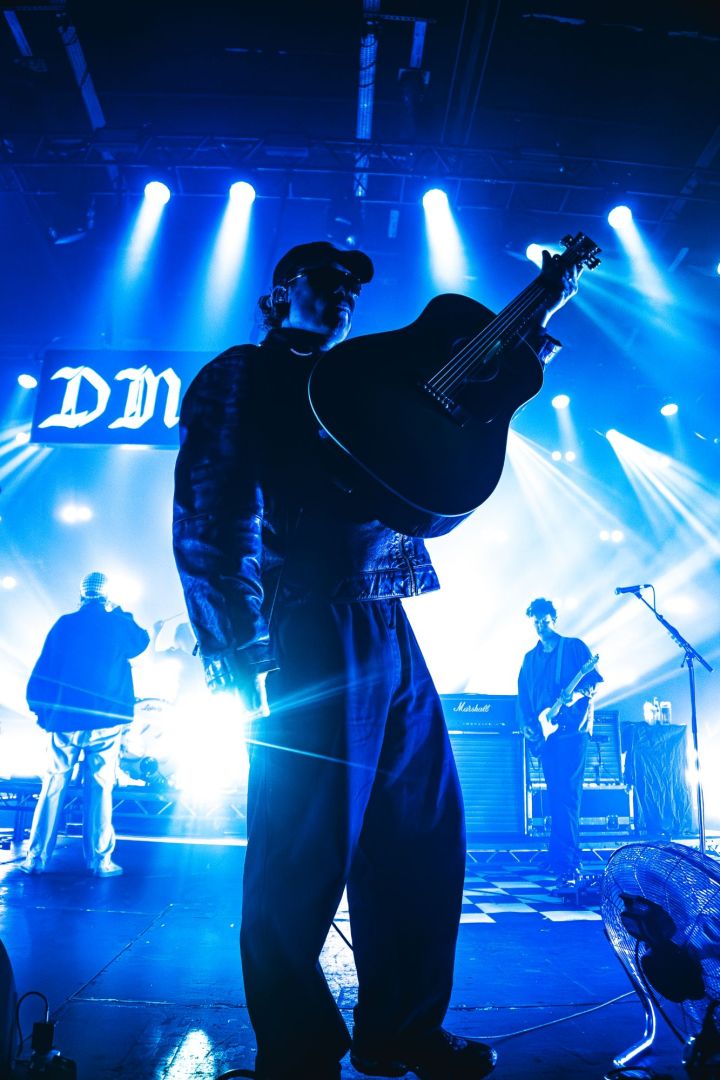
DMA‘S have always understood the architecture of a setlist: build the yearning, release the hook, repeat until the room feels weightless. There’s something distinctly northern about how their Britpop-inflected sound lands here.
Manchester has long been a city that embraces bands who wear their hearts on their sleeves and, despite hailing from Australia, DMA‘S fit neatly into that lineage without feeling derivative.
The choruses soared; the verses simmered. Even the quieter tracks carried a sense of collective ownership — as if these songs, though born thousands of miles away, belong just as much to this damp February night.

By the time the final encore rang out, the vast floor of O2 Victoria Warehouse had become a single pulsing organism — arms linked, lyrics shouted skyward, faces flushed with sweat and sentimentality.
DMA’S didn’t reinvent themselves; they didn’t need to. What they delivered was connection — unfiltered, unpretentious, and thunderously sincere.




 Umbra Music